


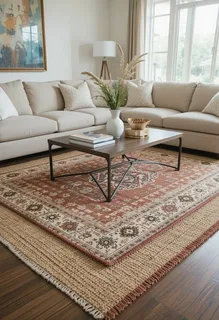
Layering modern rugs instantly adds depth, warmth, and texture to any room. For the best results, use a large, neutral, flat-weave rug as your base. Place a smaller, textured, or patterned rug on top to highlight specific furniture groupings and create a focused design anchor in your space.
A single rug ties a room together, but two rugs create a truly finished, curated appearance. Interior designers frequently use rug layering to fix awkward room proportions, add visual warmth, and introduce new textures without overwhelming the existing decor.
Many homeowners feel intimidated by the idea of mixing patterns and materials on their floors. They worry about creating a messy aesthetic or a tripping hazard. However, mastering this technique simply requires following a few basic rules regarding size, texture, and color.
This guide breaks down exactly how to mix and match your floor coverings. You will learn how to select the right base, choose a complementary top layer, and arrange them perfectly in any room of your house.
Why does layering modern rugs work for interiors?
Layering rugs serves both practical and aesthetic purposes. Practically, a double layer of rugs provides extra insulation during cold weather and helps absorb sound in large, echo-prone rooms.
Aesthetically, layering allows you to experiment with bold patterns or bright colors without committing to a massive, room-sized statement piece. You can cover a large area with an affordable, neutral base and save your budget for a smaller, high-quality top rug. This strategy adds immediate visual weight to a room, making flat or empty spaces feel cozy and lived-in.
What should you look for in a base rug?
Your base rug acts as the foundation for your design. Choose a large rug that leaves about 12 to 18 inches of bare floor around the perimeter of the room.
For the material, prioritize low-pile or flat-weave rugs. Jute, sisal, and flat-woven wool are excellent choices because they sit close to the floor and prevent the top rug from bunching up. Keep the color neutral. A solid beige, gray, or soft earthy tone allows the top layer to stand out without causing visual clutter.
How do you choose the right top rug?
The top rug is your chance to add personality. This rug should be noticeably smaller than the base rug, typically leaving at least a foot of the base rug visible on all sides.
Choose a top rug that contrasts with the base. If your base is a rough, natural fiber like jute, select a soft, plush material like a wool shag or a cowhide for the top. If your base is a solid color, pick a top rug with a bold geometric pattern or a vibrant color palette. The contrast in texture and pattern is what makes the layered look successful.
How should you arrange layered rugs in different rooms?
Different rooms require different layering approaches. Use these specific arrangements to get the best results:
- Living Room: Center your base rug in the middle of the seating area. Place the top rug diagonally under the coffee table, or center it perfectly over the base rug. Ensure the front legs of your sofa and chairs rest firmly on at least one of the rugs to anchor the furniture.
- Bedroom: Place a large, neutral base rug horizontally under the bed. Layer a smaller, softer rug on one or both sides of the bed, or place a textured runner at the foot of the bed. Choose soft materials like sheepskin or high-pile wool for the top layer to keep your feet warm in the morning.
- Dining Room: Layering in a dining room requires caution. Both the table and all the chairs must fit entirely on the top rug, even when the chairs are pulled out. Choose flat-weave materials for both layers to ensure chairs slide easily and to prevent tripping hazards.
What are the most common rug layering mistakes to avoid?
Even with great rugs, poor execution ruins the look. Avoid these common errors:
- Using two thick rugs: Layering two high-pile or shag rugs creates a bulky, uneven surface that easily causes trips and falls. Always keep the base layer flat.
- Choosing rugs of the exact same size: If the top rug covers the base rug entirely, you lose the layered effect. Ensure a clear size contrast between the two pieces.
- Clashing patterns: If you want to use two patterned rugs, ensure they share a common color palette and vary significantly in scale (e.g., a large geometric pattern on the bottom and a small, intricate pattern on the top).
Where can you buy modern rugs in India and online?
Finding the right pieces for your home requires shopping at reliable stores that offer quality materials. When you decide to buy modern rugs, you can visit local showrooms to feel the textures in person, or you can browse online catalogs for a wider selection.
If you want to buy rugs online, look for retailers that provide detailed material descriptions and high-resolution images. Buying online allows you to easily compare sizes and prices before making a decision. For homeowners looking to buy modern rugs in India, several premium design ateliers offer direct access to authentic, hand-knotted pieces that elevate any space.
How does The Ambiente craft premium handmade rugs?
The Ambiente operates as a premium design-led rug atelier based in Bhadohi, India’s famous hub of handmade carpets. Backed by the 30-year expertise of its parent company, Bhadohi Carpets, the brand seamlessly blends traditional craftsmanship with contemporary design.
Founded by Avani Khandelwal and Ayush Baranwal, The Ambiente makes high-quality, handwoven rugs accessible to modern homes. The brand operates a flagship store in Sultanpur, New Delhi, and serves a diverse clientele globally. By employing over 4,000 women weavers, The Ambiente supports sustainable rural livelihoods while delivering exceptional floor coverings. They offer both bespoke creations and ready-to-ship collections, allowing buyers to find exactly what they need for their specific interior style.
Upgrade your living space with layered rugs
Rug layering transforms basic rooms into thoughtfully designed spaces. By carefully selecting your base and top layers based on size, texture, and pattern, you easily introduce new colors and warmth into your home. Start by measuring your room, finding a sturdy neutral base, and picking a top rug that reflects your personal style.
Frequently Asked Questions (FAQ)
Can I layer rugs over wall-to-wall carpet?
Yes. Use a large, low-pile rug to cover the existing carpet and define a specific zone, like a seating area. Then, add a smaller, patterned rug on top. Choose a stiff base rug to prevent the layers from buckling over the plush carpet underneath.
How do I stop layered rugs from slipping?
Place a high-quality, non-slip rug pad underneath the base rug to keep it firmly attached to the hard floor. You can also use double-sided rug tape between the base rug and the top rug to keep the top layer flat and secure.
What is the best base rug for pets?
Choose a synthetic flat-weave rug or a tightly woven outdoor rug for your base layer. These materials resist stains, handle heavy foot traffic, and are much easier to clean when accidents happen.
Is rug layering expensive?
It depends on the materials you choose. You can keep costs down by purchasing an affordable, large jute rug for the base layer, and investing a bit more money into a smaller, high-quality wool or silk rug for the top layer.